
Concrete leveling in Greenville, SCSunken concrete won’t fix itself.
A low slab can catch a shoe, hold rainwater, scrape a car, and make your home look worn. Tell us where it sank. We’ll send your request to one qualified concrete provider in Greenville County—not a list of companies.
One request. One qualified provider at a time. We follow up if contact does not happen.
We are an independent referral publisher, not the contractor performing the work.
Show the low edge. A provider can inspect what may be happening below.
You are not sending your number to a call list
- One provider at a timeYour request is never blasted to several companies.
- A qualified concrete proWe check service fit, coverage, and provider eligibility.
- Follow-up built inIf contact does not happen, we move to the next qualified provider.
Before you pay to tear it out, see if it can be raised.
The American Concrete Institute says slabjacking often costs less than half as much as building a new slab. A provider still needs to inspect your concrete, ground, water, and access before recommending a repair.
See if my slab can be raisedCompare leveling with replacementLeveling may be worth a look
- The slab is largely intact.
- One or more edges have dropped.
- There may be empty space below it.
Another repair may make more sense
- The slab is badly broken or deteriorated.
- Movement appears to be continuing.
- Foundation, utility, or structural concerns are involved.
One request. One qualified provider. Real follow-through.
- 1Tell us what sank
Share the slab, address, timing, and the best way to reach you.
- 2We send it to one qualified pro
Your information goes to one provider—not a list of companies.
- 3We make sure you are not forgotten
We check whether contact happened. If not, we send it to the next qualified provider.
We are the referral publisher, not the contractor. We cannot guarantee that a provider will contact you or offer a quote.How matching works
Foam or grout? Start with the slab.
Some providers use expanding foam. Others use a cement-based mix. Both go under the concrete through small holes. Ask why the method fits your slab, how the provider will control the lift, and how the patched holes should look.
| Question | Expanding foam | Cement-based mix |
|---|---|---|
| Holes in the slab | Usually smaller than holes used for a cement-based mix. | Usually larger than holes used for expanding foam. |
| Material under the slab | Expanding foam is placed under the slab. | A flowing cement-based mix is pumped under the slab. |
| Questions to resolve | Ask how the lift is controlled, how holes are patched, and when the slab can be used. | Ask about added weight, cleanup, hole patching, and when the slab can be used. |
| Which one fits? | Neither method fits every slab. Ask why the suggested method makes sense for your property and the result you want. | |
Want a useful price? Show the real job.
Size is only one part of an estimate. The drop, cracks, water, access, and condition of the slab can change the work and the price.
See what affects the priceStart with the slab that is causing trouble
Choose the surface below. We’ll carry that choice into the project form so you can explain the problem without starting over.
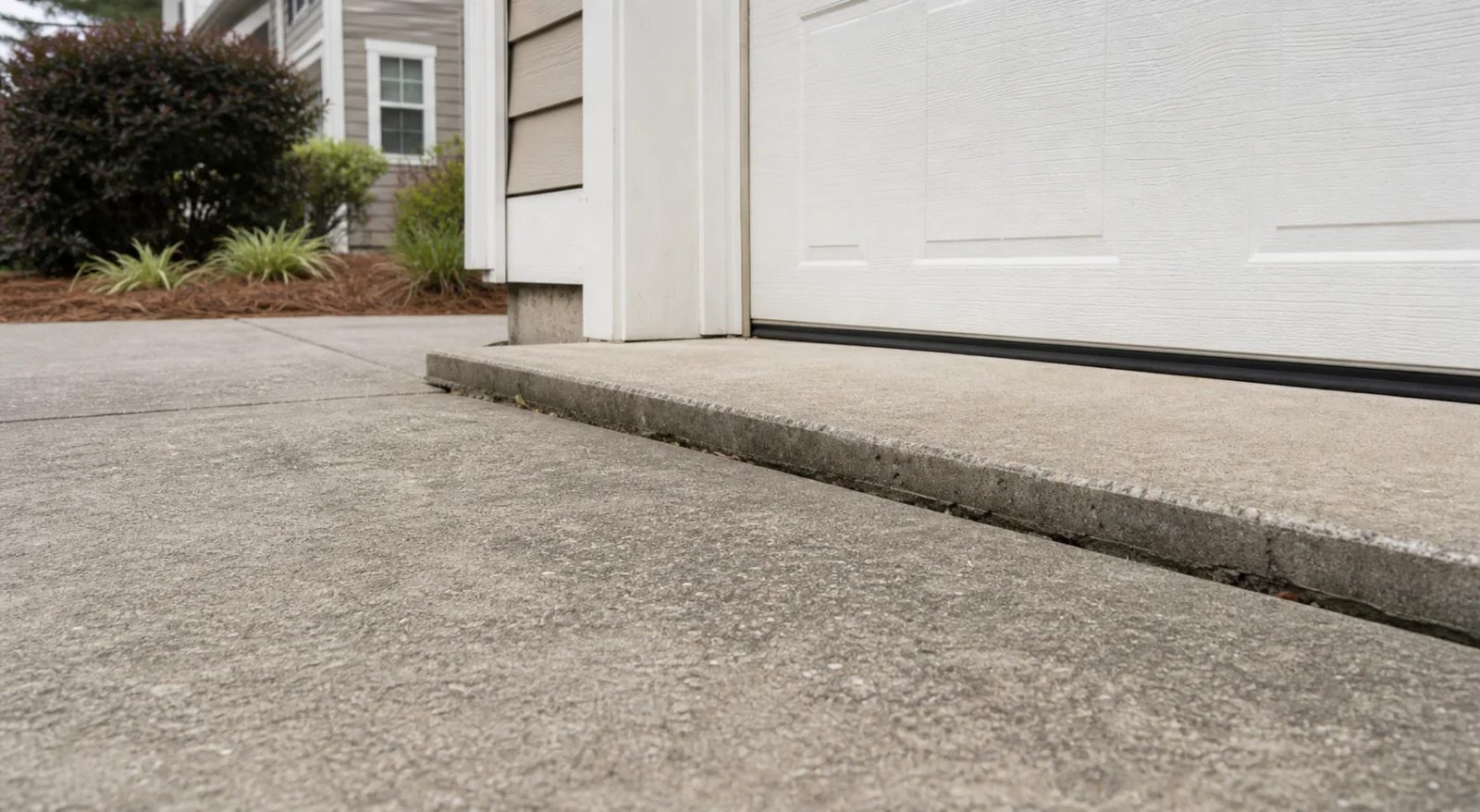
Show the gap. Skip the guesswork.
Show where the driveway meets the garage, curb, walk, or next slab. Point out water, cracks, and anything that may block access.
Get help with my drivewayGreenville clay is only part of the story.
Clay and rain can affect the ground, but a regional map cannot explain your slab. A provider needs to look at water, slope, access, buried lines, and the concrete at your home.
Read the Greenville County guideMake it easy for a pro to understand the job.
- One wide photo of the area
- The height difference at the slab edge
- Cracks, seams, and nearby slabs
- Where water runs or sits
- The path to the work area

Your uneven concrete is still waiting.
Send one request. We’ll put it in front of one qualified provider and follow up.